
Leading Products For Retaining Wall Construction You Can Trust
Find out which top-rated products professionals rely on to build secure, durable, and visually appealing retaining walls.
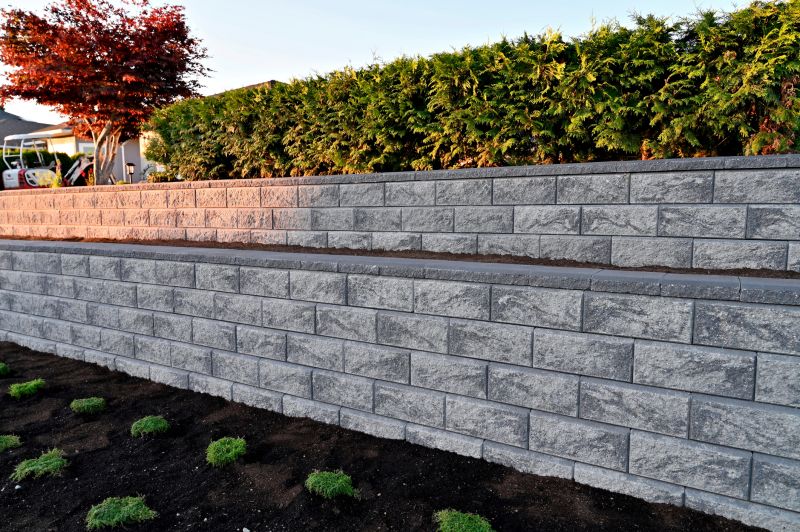 Constructing a durable and visually appealing retaining wall requires careful selection of the right products. These products provide the structural support needed to hold back soil and prevent erosion, while also offering aesthetic options to complement various landscape designs. From natural stone to concrete blocks and specialized adhesives, the variety of materials available allows for customization based on project scope, design preferences, and site conditions.
Top Overall Option
Versatile Retaining Wall Block System
A modular block system designed for easy installation, offering a range of textures and colors to suit different landscape styles. Its interlocking design provides stability and flexibility, making it suitable for various project sizes. The system includes matching cap stones and accessories to complete the look and ensure durability.
Types of Products For Retaining Wall Installations
Concrete Blocks
Precast concrete blocks are a popular choice for their strength, uniformity, and ease of installation. They come in various sizes and finishes to match different aesthetic preferences.
Natural Stone
Natural stone offers an organic look and can be stacked or mortared for a rustic or formal appearance. It is valued for its durability and timeless appeal.
Segmental Retaining Wall Blocks
Interlocking blocks that are designed for quick assembly and stability, often used in landscape and commercial projects.
Timber Retaining Wall Components
Pressure-treated wood or composite timbers provide a natural look and are suitable for smaller or decorative walls.
Gabion Baskets
Wire cages filled with stones or other materials create a flexible and permeable retaining structure, often used for erosion control.
Precast Concrete Panels
Large panels that can be assembled quickly, ideal for retaining walls requiring a modern or industrial aesthetic.
Drainage Pipes and Systems
Essential accessories to manage water flow behind the wall and prevent pressure buildup that could compromise stability.
Geogrids and Reinforcing Fabrics
Materials used to reinforce soil and improve the stability of the retaining wall, especially on slopes.
Adhesives and Mortars
Specialized bonding agents to secure stones or blocks, ensuring a tight and stable structure.
Landscape Edging Products
Edges and trims that define the boundary of the retaining wall and prevent soil from spilling over.
Capping Stones
Decorative caps that sit atop the retaining wall, providing a finished look and additional protection.
Erosion Control Meshes
Meshes that stabilize soil and prevent erosion around the retaining structure, especially on slopes.
Popular Choices
Widely used for their versatility, ease of installation, and variety of finishes suitable for different landscapes.
Provides a natural appearance with a range of textures and colors, ideal for rustic or traditional styles.
Designed for straightforward assembly, these blocks are favored for DIY projects and professional installations alike.
Pre-packaged kits that include all necessary components for small to medium-sized decorative walls.
Complete sets for creating flexible, permeable walls with wire baskets and stones.
Prefabricated panels that simplify construction, suitable for modern and industrial designs.
Popular for ensuring proper water management and structural integrity in retaining wall projects.
Commonly used to finalize the look and improve the durability of retaining structures.
Choosing the appropriate products involves understanding the specific requirements of your installation, including load-bearing capacity, soil type, and environmental exposure. Proper installation techniques and compatible materials are essential to ensure stability and longevity. Additionally, accessories such as drainage systems, geogrids, and reinforcing fabrics can enhance the performance of your retaining wall, especially in challenging terrains.
While some products are designed for DIY projects, others may require professional expertise for optimal results. Regardless of the complexity, selecting high-quality, reliable components is crucial for achieving a safe and effective structure. Investing time in research and understanding the different options can lead to a more successful installation that meets both functional and aesthetic goals.
Overall, the market offers a wide range of products tailored to various needs, from small garden borders to large commercial retaining walls. By carefully considering your project's specific demands and exploring the available options, you can create a stable and attractive feature that enhances your landscape for years to come.
Key Buying Considerations
- Determine the load-bearing requirements based on soil type and height of the wall.
- Select materials that match the overall landscape design and aesthetic preferences.
- Consider the environmental exposure, such as moisture, freeze-thaw cycles, and UV exposure.
- Evaluate the ease of installation, especially if planning a DIY project.
- Ensure compatibility of accessories like drainage pipes, geogrids, and adhesives with the main wall materials.
- Assess the long-term durability and maintenance needs of the chosen products.
- Account for local building codes and regulations related to retaining wall construction.
- Plan for proper drainage solutions to prevent water pressure buildup behind the wall.
- Choose products with sufficient structural stability for the intended height and load.
- Consider the availability of matching accessories and finishing elements for a cohesive look.
- Factor in the project budget, balancing quality and cost-effectiveness.
- Research product reviews and manufacturer specifications for reliability and performance.
- Think about future expansion or modifications to the retaining wall design.
- Evaluate the environmental conditions that may influence material performance over time.
- Consult with professionals if the project exceeds DIY capabilities or involves complex engineering.